Pokémon Type Team Wheel
18 optionsRandom draw
Now playingTeam slot 10 / 1 spins completed
Turn Queue · Games
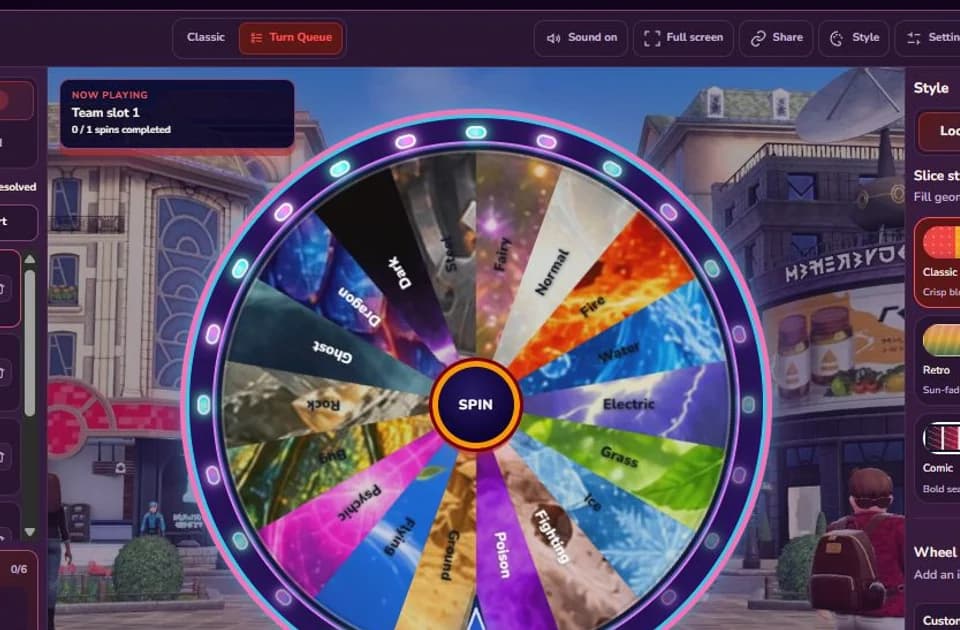
Build a six-slot team by spinning Pokémon types in Turn Queue. Each result fills one slot, and selected types leave the wheel to keep the mix varied.
Ready to spin
18 optionsRandom draw
Updated August 12, 2026. All 18 Pokédex types were matched to Options, and six one-turn Queue slots were run through in order with winner removal enabled. Source: official Pokédex type filter, checked August 11, 2026.
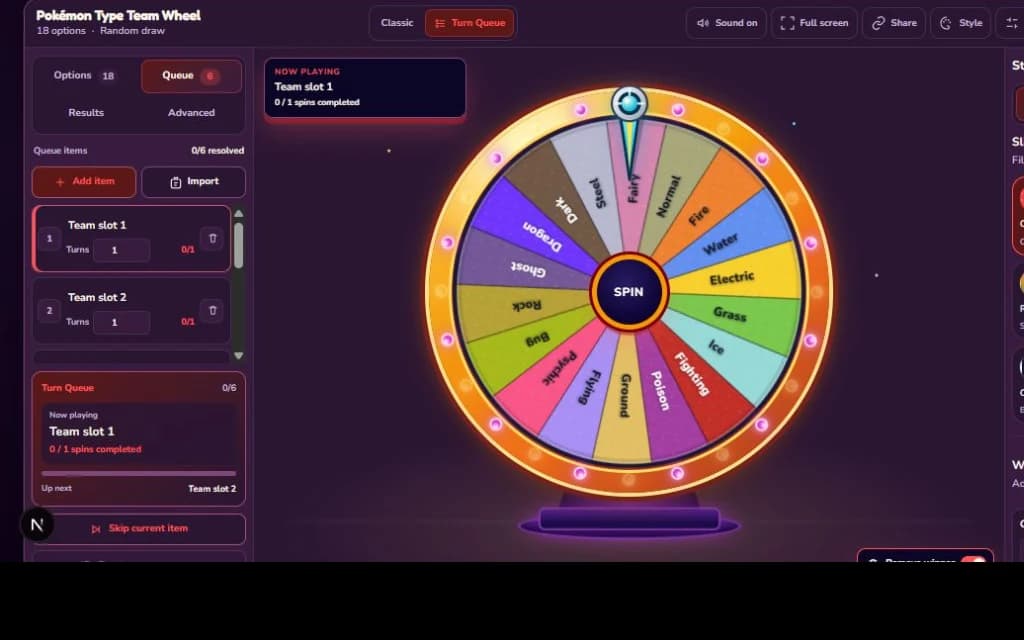
Pokémon Type Team Wheel loads the 18 types shown in the official Pokédex filter and places six team slots in Turn Queue. Each spin assigns a type to the next slot; with Remove winner on, the starter workflow produces six different type results. It is a creative team-building constraint, not an automatic competitive team generator.
Options holds Normal, Fire, Water, Electric, Grass, Ice, Fighting, Poison, Ground, Flying, Psychic, Bug, Rock, Ghost, Dragon, Dark, Steel, and Fairy. Queue holds Team slots 1 through 6. Do not paste Pokémon names into Queue unless you want the turns to represent named players or positions. First spin the type; then choose an eligible Pokémon for that slot outside the wheel.
Suppose the results are Water, Steel, Flying, Ghost, Ground, and Fairy. Before choosing favorites, look for overlap: a dual-type Pokémon may satisfy more than one offensive or defensive idea, but it should still occupy only one team slot. Keep a note of the exact game and format, then use its current Pokédex or team-building data to select species available there.
A Pokémon's type influences weaknesses and interactions, but a workable roster also depends on stats, roles, speed control, items, legal forms, and the moves available in the game being played. Moves are the actions a Pokémon can use; Abilities are separate traits that can change how it functions. Calling both “skills” hides an important distinction. The official Pokédex pages show type, weaknesses, Abilities, and evolution information, while exact move availability and rules can vary by title and format.
If the results create an impossible or unfun brief, do not secretly respin one slot. Publish a repair rule—such as one team-wide veto, or replacing the most recent type—and use it consistently.
Variety draft: keep Remove winner on and take six unique types. Monotype support draft: choose one anchor type, delete unrelated types, and spin for secondary coverage ideas. Challenge run: keep every type eligible but allow only species obtainable before a stated point in the game. These variations change the roster problem without pretending the wheel understands battle strategy.
A normal picker can produce six results, but Turn Queue makes the six-slot structure visible before the first spin. The current slot, completed slots, and remaining type pool stay in the same view; Results records the order. Advanced can weight or remove types for a themed challenge, while the type artwork makes a crowded wheel easier to scan. For a simple name draw, use Pokemon Spin The Wheel instead.
The type set was checked against the official Pokémon Pokédex. Game mechanics should be verified for the exact title and ruleset you use. Pokémon names and marks belong to their respective owners; this is an independent, editable fan-use picker and is not endorsed by The Pokémon Company or Nintendo.
Tell me what should go on the wheel, which mode it needs, and how you would use it.
Keep playing