Pokemon Spin The Wheel
24 optionsRandom draw
Classic · Games
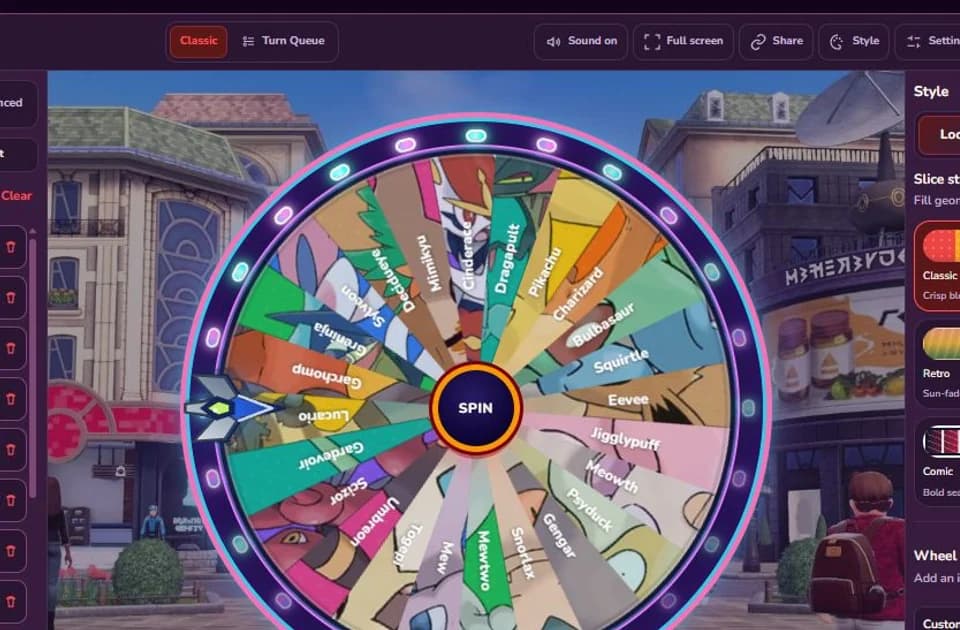
Spin 24 familiar Pokémon names for a casual favorite, drawing prompt, party challenge, or starter draft. Edit the list to match the game, generation, or collection your group uses.
Ready to spin
24 optionsRandom draw
Updated August 12, 2026. All 24 names were verified as Pokédex entries and the source scope was corrected so this editorial set is not misrepresented as a Pokémon UNITE roster. Source: official Pokémon Pokédex names, checked August 12, 2026.
This preset contains 24 familiar Pokémon names, including Pikachu, Charizard, Eevee, Gengar, Lucario, Greninja, Mimikyu, and Dragapult. It is an editorial starter set, not every species, not a power ranking, and not the current roster of one particular game. That distinction matters because availability, forms, moves, Abilities, and battle rules change across main-series titles, Pokémon UNITE, Pokémon GO, and the Trading Card Game.
If the result will affect play, name the title, format, generation, and legal pool before spinning. If the activity is drawing, trivia, or choosing a favorite, say that instead. A Pokémon can have different usable moves or forms across games, so a generic name wheel cannot promise a legal competitive pick everywhere.
Spin once, then look up the selected Pokémon's type, weaknesses, Abilities, and evolution line on the official Pokédex. Write the source and access date rather than relying on memory.
Give players a time limit, allow an official reference image, and judge the drawing on the agreed category—recognizability, pose, or creativity—not on battle strength.
Turn Remove winner on and spin once per player. Each name leaves the pool, and Results records who received what. Decide whether alternate forms count as the same option before starting.
After a name is selected, players investigate which moves and Ability combinations are actually available in the chosen game. Moves and Abilities are different mechanics; do not merge both under the vague label “skills.”
Remove winner and spin six times for a surprise roster. Then perform the real team check outside the wheel: shared weaknesses, role coverage, legal forms, available moves, held-item rules, and whether every member exists in the selected title. If a result is unavailable, apply a rule written in advance—such as replacing only unavailable species—instead of respinning anything that looks inconvenient.
This page answers “Which Pokémon name?” The Pokémon Type Team Wheel answers “Which type should fill the next of six team slots?” and uses Turn Queue to show that structure. Use the type page for coverage constraints; use this name page for favorites, research prompts, art games, or a draft from a known species pool. Keeping these intentions separate avoids a wheel that mixes names and types in ways players cannot interpret.
Each starter name has its own full-slice artwork, so the wheel feels like a themed activity rather than a plain list. Options can be replaced with one generation or a personally owned collection, Import handles a longer approved list, Remove winner prevents duplicate drafts, and Results keeps the order visible. Those features organize the group process; they do not calculate matchups or recommend the strongest Pokémon.
The 24 names were checked as Pokémon names against the official Pokédex. Review the relevant official game data before using a result in play because rules and availability can change. Pokémon names, characters, and marks belong to their respective owners. This independent fan-use template is not endorsed by The Pokémon Company or Nintendo.
Tell me what should go on the wheel, which mode it needs, and how you would use it.